
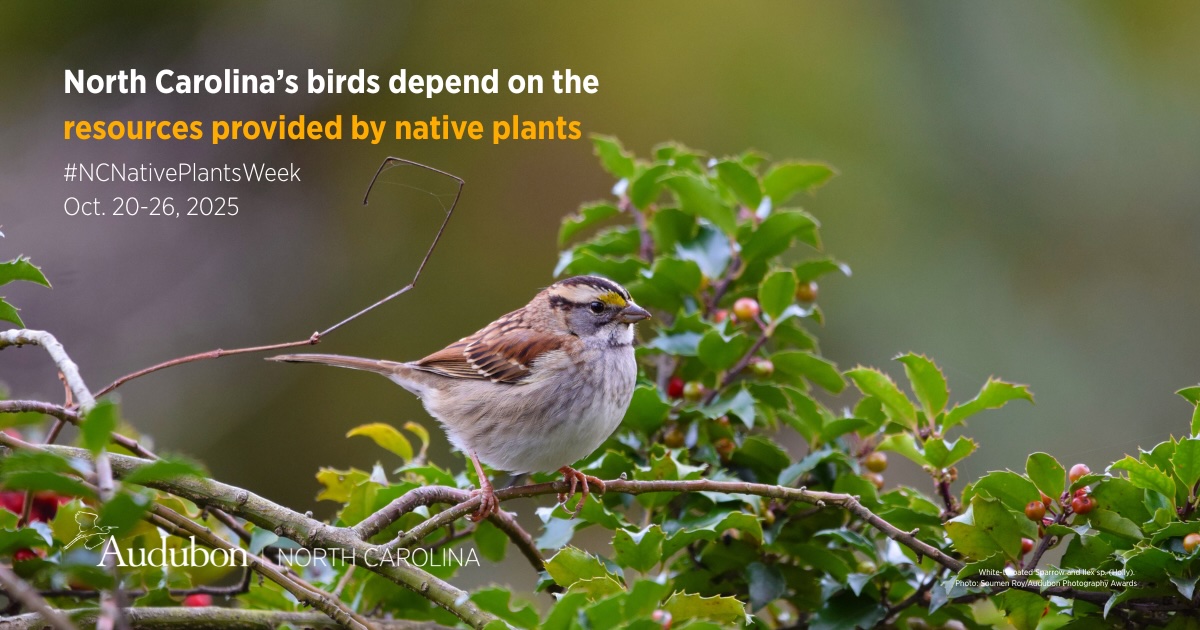
It’s official — Governor Josh Stein has proclaimed October 20–26, 2025, as Native Plants Week in North Carolina, celebrating the plants that define our state’s natural heritage, history, and beauty. Read the proclamation to learn more.
The North Carolina General Assembly also recognizes their importance, requiring that native trees, shrubs and plants are used for landscaping at state parks, historic sites, and along roadways.
Why Native Plants Matter
North Carolina is home to more than 3,900 native species — from the spicebush and viburnum to the flowering dogwood and longleaf pine. Native plants thrive in our local climate, making them easy to care for requiring less water, and reducing the need for fertilizer and pesticides.
They also provide vital habitat. Native trees, shrubs, and flowers host the insects that birds depend on, especially during nesting season, and supply food and shelter for all kinds of wildlife. Audubon offers several resources on native plants and the benefits to birds, wildlife and people.
Get Started in Your Own Garden
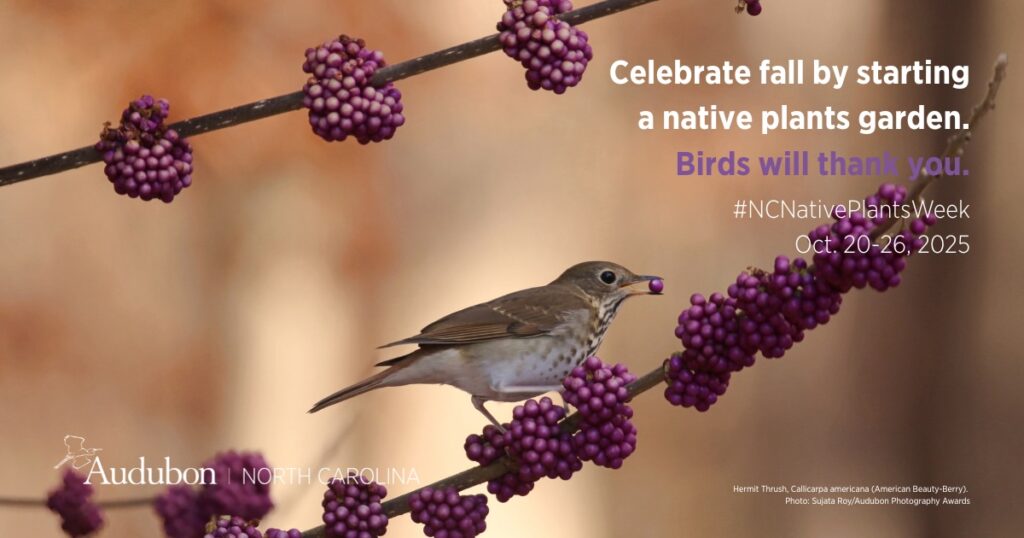
Fall is the perfect time to plant. Start a native plants garden. If you need ideas on native plants, explore Audubon’s Native Plants Database to find bird- and pollinator-friendly plants suited to your area — and where to buy them locally:
For coastal gardeners, the NC Sea Grant Coastal Landscapes Initiative fosters coastal landscapes that are beautiful, functional, cost-efficient and environmentally friendly. It offers a detailed Native Plants Guide featuring 34 plants that are not only beautiful but resilient to wind, salt, and flooding — perfect for the Topsail region. The guide also includes coastal landscape designs incorporating native plants.
Protecting Native Plants on Topsail Beach
Here on Topsail Island, native coastal plants like seabeach amaranth (a federally threatened species) play an essential role in stabilizing dunes and supporting wildlife. Unfortunately, the invasive beach vitex vine crowds out this rare plant and other native vegetation.
Many properties on Topsail Island have been identified as having the invasive beach vitex. Local towns and the Topsail Island Shoreline Protection Commission are working together to remove beach vitex and restore native dune plants such as sea oats. Homeowners can help by not planting beach vitex, planting native species, and supporting community eradication efforts. Learn more at Topsail Beach Vitex Program.
In Closing
Native plants connect us to North Carolina’s wild beauty and protect the habitats that make our coast so special. By choosing native species for our gardens and supporting local restoration efforts, we help ensure a healthier, more resilient coastal environment — one that benefits birds, wildlife, and people alike.